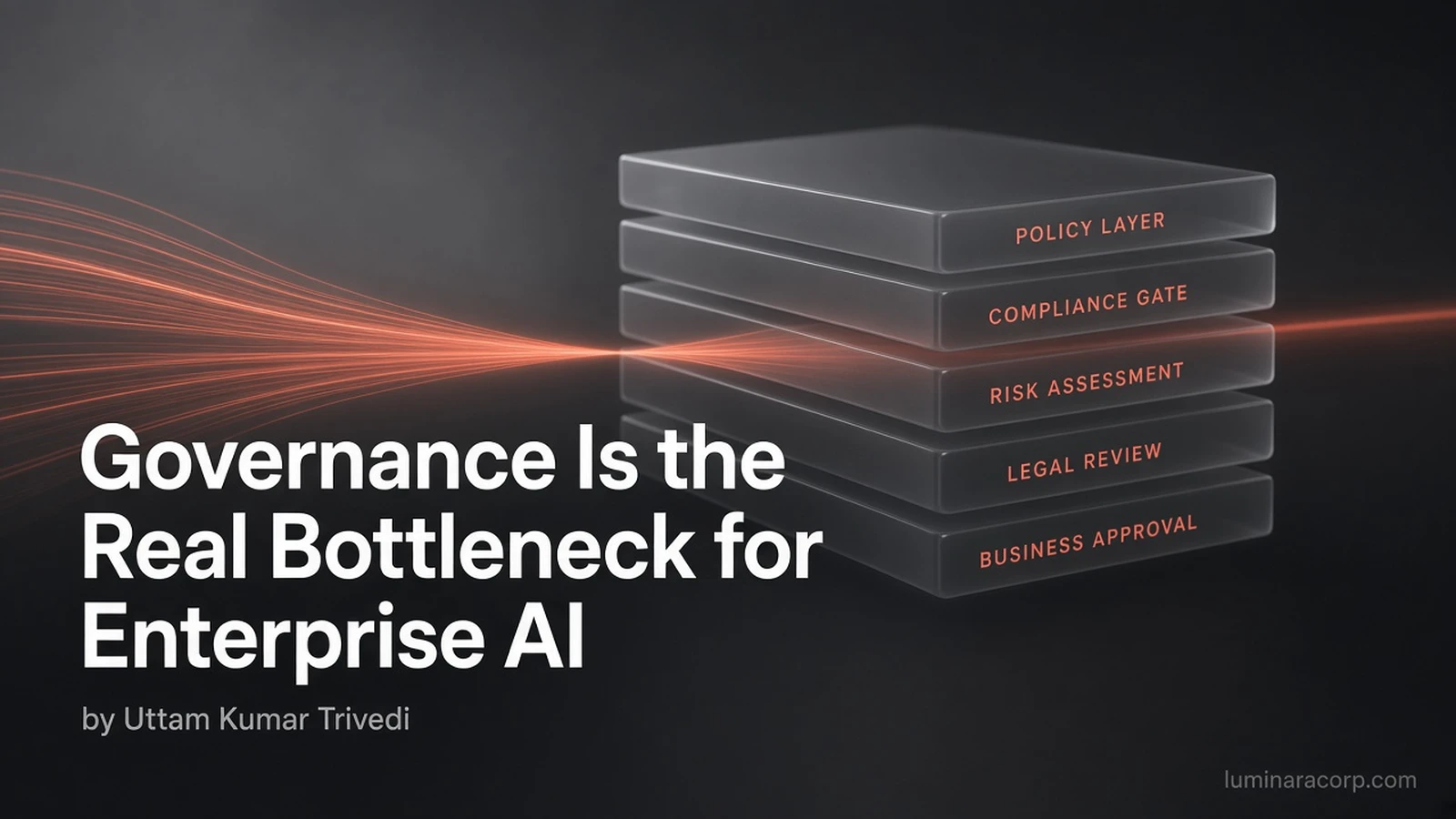
The model works in the demo. The data looks clean. The business case is approved. Then someone asks the simple question: “Who is responsible when this output is wrong?” That question often stops the conversation. Not because people do not care, but because no one has a clear answer. This is where governance stops being a compliance exercise and starts becoming the actual reason most AI initiatives stall.
What governance actually means in practice
Governance is not just about policies and review meetings. It is about who owns the data, who can change the model, who approves an action based on its output, and what happens when something goes wrong. Without these answers defined early, every pilot eventually hits a wall where progress depends on ad-hoc decisions that no one wants to own.
| Question | When It Is Not Defined |
|---|---|
| Who owns the output? | No one is accountable when accuracy drops or bias appears |
| Who can change the model? | Changes happen without review or documentation |
| What data can be used? | Sensitive data leaks into training sets quietly |
| Who approves automated decisions? | Actions are taken without clear human oversight |
Why it becomes the bottleneck
Most teams treat governance as something that can be figured out after the model proves useful. In reality, the absence of governance creates friction at every step. Data teams hesitate to share access. Legal teams block use cases. Business owners refuse to rely on output they cannot explain. The pilot stays in a safe, limited environment because moving it forward requires decisions that no one has the authority or clarity to make.
- Define clear ownership of data, model changes, and automated decisions before any pilot begins.
- Establish simple approval rules that everyone understands instead of leaving them to ad-hoc judgment.
- Build monitoring and rollback processes from day one so problems are caught early.
- Treat governance as part of the operating system, not as a later compliance layer.
The model can be correct. The real question is whether anyone is willing to bet their reputation on it.
What changes when governance is built in
When governance is treated as part of the design from the beginning, the conversation shifts. Instead of asking “Can we use this data?”, the question becomes “How do we use this data responsibly and who owns the outcome?” This clarity makes it easier for different teams to say yes instead of defaulting to no. It also reduces the number of surprises that appear when the work moves from pilot to production.
The organizations that scale AI successfully do not have perfect governance on day one. They have clear ownership and simple rules that everyone understands. That is usually enough to keep moving while the system matures.
Limitations and corrections
Operating argument about ownership and controls. It is not a legal or regulatory opinion and does not cite a specific statute or standard.
To request a correction, contact Luminaracorp.